England
SCOTTISH ROMANCE: My Sinful Surrender to a Highlander Werewolf (Scottish Werewolf Pregnancy Romance) (Historical Medieval Shape Shifter Paranormal Science Fiction Short Stories)England functions as a geographical setting and a contested social ideal. It is presented as a growing nation whose wealth, trade, aristocratic families, legal arrangements, and claims to civilization create opportunities for some characters while enclosing others in dependency. The country’s decisive significance lies in this contradiction: the England that calls itself orderly and humane repeatedly relies on property, status, marriage, and force to determine who may belong, who may leave, and who may be treated as expendable.
Definition and Social Image
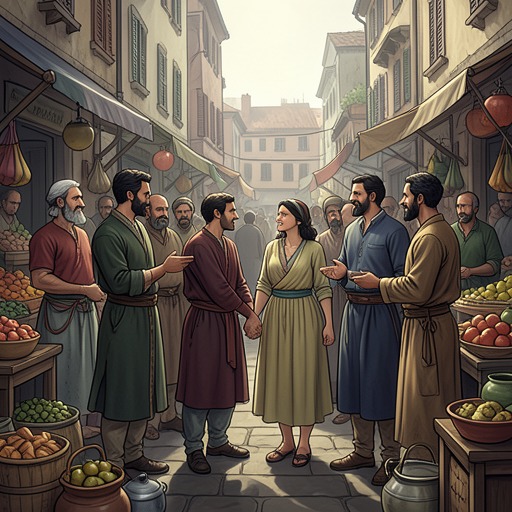
England is introduced through the language of prosperity and national ambition. Elizabeth describes a country on the verge of becoming a great nation, supported by boats that trade and search for resources to improve its expanding communities. The Kensington name is associated with humanitarianism, business ownership, and the willingness to make difficult decisions, while wealth is treated as a normal condition of life rather than an exceptional privilege. This self-image gives England symbolic authority: its upper classes understand themselves as civilized actors capable of managing society, commerce, and family reputation.
That confidence is inseparable from hierarchy. Elizabeth’s brother Richard objects to her relationship with Henry because Henry is a farmer, does not shave, and belongs to a family considered socially common. Richard insists that aristocrats must not damage their name by associating with people beneath them. Elizabeth understands his anxiety but continues the relationship because Henry allows her to abandon the performance expected of her class. England therefore appears not simply as a nation but as a system of manners, inherited status, and surveillance, in which intimacy can become a threat to family capital.
Commerce, Marriage, and Mobility
The country’s economic order repeatedly turns marriage into a form of exchange. Abigail’s plan is described by Sally as a transaction in which Abigail will marry a rich American so that he can inherit his family fortune, later divorce him, and use the money to establish a business in London. Abigail rejects the apparent simplicity of this explanation because it conceals the grief and dislocation caused by the accident in which her family died: her yacht capsized, her mother and older brother were found dead, and her father and younger sister were taken by the sea. London represents a possible clean break, but escape is reached through a bargain rather than through uncomplicated freedom.
England also supplies the legal and financial imagination for William’s proposed marriage. William and Mr. Jenkins consider treating marriage as a business deal, seeking a spouse who can receive a benefit while protecting the family name and estate. Their proposed mail-order bride would receive transportation and citizenship, remain married for at least ten years, and bear a child, while being prevented from claiming any part of the inheritance. The arrangement exposes how English property logic converts a wife’s residence, fertility, and legal status into contractual safeguards for male wealth.
The same pattern governs the movement of women away from England. Emma leaves after a house fire destroys her home and family life, while bills accumulate and the loss of Jasper, the family breadwinner, makes remaining in England financially painful. She accepts marriage to Lucas because he is presented as a good man who needs help with his niece, and because Texas offers distance from the reminders of loss. Her departure is framed as a new adventure toward the American West, but it is also an exit purchased through the mail-order-marriage system.
England and the Highland Threat
The English setting becomes increasingly militarized as Highlanders approach. Luna observes newly built cogs returning after construction in the harbor and sees soldiers in armor disembark to prevent another attack on English territory. England has not faced such an assault for more than five years, but the guarded harbor and whispered reports of the Highlanders make security feel temporary. The Highlanders are described by English observers as conquering, pillaging, plundering men who laugh while drunk; even curiosity about their kilts is mixed with fear and the expectation that they are uncivilized.
The contrast between English rhetoric and actual violence sharpens during the public execution of a Highland prisoner. An English speaker declares that the execution will teach the population that England rejects barbaric behavior, stands against oppression, and is stronger than everyone else. Yet the prisoner’s crime is not clearly stated; piracy is only rumored, and the absence of his boat makes the justification uncertain. England’s public language of law and freedom thus accompanies a spectacle whose grounds remain obscure, making civilization look like a claim asserted by the people holding power.
The execution becomes the opening for an armed reversal. Highlanders burst through the gate with swords, painted bodies, and a willingness to fight despite wounds. They kill the English soldiers and take no prisoners. Afterward, they escape by vessel, carrying the victory of having killed Henry and struck at the English heart. Conner warns that the King and Queen will seek vengeance and send enough soldiers to destroy the Highlanders, while recognizing that the English response will eventually be overwhelming in numbers. England’s apparent strength therefore creates a cycle of retaliation: the state’s punishment produces the very war it claims to be containing.
England as Departure and Contested Homeland
For Victoria, England is a familiar landscape that disappears behind her as a political and economic agreement sends her toward the Scottish hills. Her marriage to Dylan is arranged because the families see commercial advantage: Scottish wool can command a good price, while Dylan’s grain is heartier than what the English can grow. Andrew dislikes the idea of marrying his daughter to a supposedly barbaric Scotsman, but the trade opportunity outweighs his objections. Victoria is not consulted until the arrangement is effectively decided, and her journey north becomes the physical cost of her parents’ commercial calculation.
As the English countryside gives way to Scottish hills, Victoria stares at peasant farmers and mud huts with the disdain of someone trained to measure places by English standards. Dylan, meanwhile, has chosen the marriage for similarly practical reasons, imagining an excellent business partnership with England and treating a wife as an additional benefit. His clansmen are unsettled by the voluntary mixing of Scottish and English blood, especially because English marauders have historically attacked Scottish weddings. The movement from England to Scotland therefore reverses the usual direction of authority: the English daughter becomes part of a Highland arrangement, and the border is crossed through both commerce and cultural suspicion.
Elizabeth’s encounter with Patrick McDowell makes the threat more intimate. A letter identifies Patrick as a Highland warrior charged with taking English land and pillaging whatever he can find. He has watched Elizabeth from afar and demands that she become his, threatening to destroy her town and take her by force if she refuses. The continuing letters grow increasingly frightening, while England’s local defenses remain dependent on soldiers, family influence, and the magistrate’s ear. The country’s claim to safety is shown to be conditional, vulnerable to a warrior who can enter its social world first through language and then through violence.
Wider Networks of Power
England is also a reference point through which other locations and peoples are judged. Nairobi grows up in South Africa while her mother teaches her English and the ways of the West, preparing her from childhood to find an American husband and become a mail-order bride. America is imagined through the kindness of nurses and missionaries, but the opportunity still depends on a system that relocates women across borders according to male demand. England’s broader cultural influence is therefore connected to language, Western education, beauty standards, and the belief that marriage abroad is a route to safety.
The book places England’s social hierarchy beside other forms of domination. Opal, whose mother was Haitian and whose father was Native American, is lighter-skinned than many plantation workers and is moved into house service partly because of that appearance. Her mother has been sold away, her father has disappeared, and fellow workers function as a substitute family. After escaping, Opal hides in a tree in rural Arkansas while men search for her and dogs bay below; she knows that returning to the South could expose her to another person willing to claim her as property. Her story makes England’s language of civilization part of a larger world in which race, labor, and ownership determine freedom.
The Watchers’ rule over Earth provides another contrast. They supply technology, healing, and even control over the weather, but require one person from every community each year. Those selected may become slaves or be used for breeding as the Watchers attempt to combine their genes with humanity. Against this alien system, England’s contracts and family estates may appear more familiar, but the repeated use of marriage, reproduction, labor, and citizenship as instruments of control prevents a simple moral division between civilized England and monstrous outsiders.
Narrative Significance
England’s narrative role is that of a threshold: characters leave it to seek money, survival, love, or autonomy, while invaders cross into it to challenge its authority. Its ports, estates, markets, families, and guarded towns organize movement, but they do not guarantee freedom. The country’s wealth enables business alliances and escape plans even as its class system restricts romantic choice and its political power authorizes punishment.
The most revealing contrast is between England’s declared values and the consequences of its institutions. Its officials speak of freedom while executing an enemy whose crime is uncertain; its families speak of protection while arranging daughters’ marriages for trade; its wealthy men speak of responsibility while designing contracts to control wives, heirs, and estates. England consequently becomes less a stable moral center than a stage on which competing claims to civilization are tested. Its importance lies in the way the narrative makes departure from England feel both liberating and costly: leaving can mean survival or self-invention, but it also means entering another order whose bargains may be just as demanding.